
End mill coatings are thin layers of ceramic or ceramic-like materials applied to the surface of cutting tools as covered in our CNC End Mill Selection Guide. Coatings extend tool life, allow higher cutting speeds, and improve surface finish by reducing heat and friction at the cutting edge. The right coating can double or triple the cutting speed compared to an uncoated tool.
This guide covers the most common end mill coatings, how they work, which materials they are best for, and how to select the right coating for your application.
How Coatings Work
Three Purposes of Coatings
Coatings serve three purposes in machining. They reduce friction between the cutting edge and the workpiece which lowers cutting forces and reduces heat generation. They provide a thermal barrier that protects the carbide substrate from the high temperatures generated during cutting. They increase surface hardness which resists abrasive wear.
The coating thickness is typically 2 to 5 micrometers (about 0.00008 to 0.0002 inches). The coating is applied using physical vapor deposition (PVD) or chemical vapor deposition (CVD). PVD is the most common method for end mill coatings because it operates at lower temperatures that do not affect the carbide substrate properties.
How Coatings Are Applied
The PVD process places the cutting tools in a vacuum chamber and heats them to around 500 degrees Celsius. A solid coating material is vaporized using electron beams or plasma and then condenses on the tool surface as a thin film. The process takes 2 to 4 hours and produces a uniform coating thickness across complex tool geometries.
CVD operates at higher temperatures around 800 to 1,000 degrees Celsius. The coating material is introduced as a gas that reacts chemically on the tool surface. CVD coatings are thicker and more uniform than PVD coatings but the high temperature can affect the carbide substrate’s properties.
The coating adhesion depends on surface preparation before deposition. Tools are cleaned in multiple chemical baths and sometimes plasma-etched to remove surface contaminants.
Common End Mill Coating Types
Titanium Nitride (TiN)
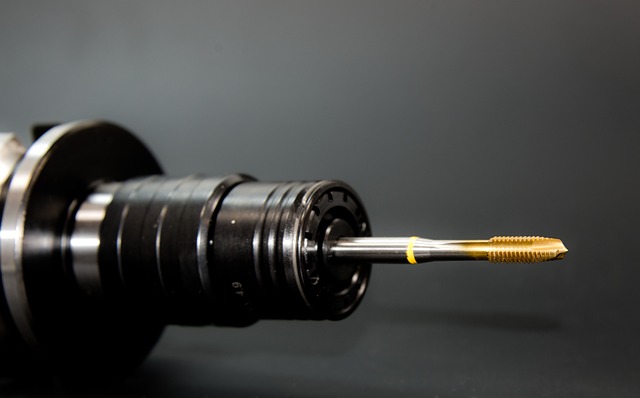
TiN is the most common and least expensive end mill coating. It has a distinctive gold color and is widely used for general-purpose machining. TiN has a hardness of approximately 2,300 Vickers and a maximum operating temperature of 600 degrees Celsius. It provides a 20 to 30 percent increase in cutting speed over uncoated tools.
TiN is best for general steel machining, cast iron, and low-alloy steels. It is less effective for hard materials or high-temperature alloys because the coating breaks down above 600 degrees Celsius.
Titanium Carbonitride (TiCN)
TiCN has a blue-gray color and is harder than TiN at 3,000 Vickers. TiCN provides better wear resistance for applications where abrasion is the primary wear mechanism. The maximum operating temperature is lower at 400 degrees Celsius.
TiCN is best for machining steel, cast iron, and non-ferrous materials where abrasion resistance is important. TiCN provides 35 to 50 percent higher cutting speeds compared to uncoated tools.
Titanium Aluminum Nitride (TiAlN)
TiAlN has a violet-brown color and is the most popular coating for modern high-speed machining. TiAlN has a hardness of 3,300 Vickers and a maximum operating temperature of 800 degrees Celsius. The aluminum in the coating forms a layer of aluminum oxide on the surface when heated which provides additional thermal protection.
TiAlN is best for machining stainless steel, titanium alloys, high-temperature alloys, and hardened steels. TiAlN provides 50 to 70 percent higher cutting speeds compared to uncoated carbide. TiAlN is also effective in dry machining operations where no coolant is used.
Aluminum Titanium Nitride (AlTiN)
AlTiN has a black or dark purple appearance and contains a higher percentage of aluminum than TiAlN. AlTiN has a hardness of 3,500 Vickers and a maximum operating temperature of 900 degrees Celsius. The higher aluminum content provides better oxidation resistance.
AlTiN is best for hardened steel above 45 HRC, aerospace alloys, high-speed machining, and dry machining. AlTiN provides 75 to 100 percent higher cutting speeds compared to uncoated carbide.
Aluminum Chromium Nitride (AlCrN)
AlCrN has a gray-black color and provides the highest temperature capability of any common coating. AlCrN has a hardness of 3,200 Vickers and a maximum operating temperature of 1,100 degrees Celsius. The chromium content improves corrosion resistance.
AlCrN is best for titanium alloys, nickel-based alloys, Inconel, and the most demanding high-temperature applications.
Diamond-Like Carbon (DLC)
DLC has a black appearance with the lowest friction coefficient of any coating. DLC has a hardness of 2,000 to 3,000 Vickers depending on formulation. The maximum operating temperature is 500 degrees Celsius.
DLC is best for aluminum, plastics, composites, and non-ferrous metals. The low friction coefficient prevents built-up edge on the cutting edge. DLC provides 30 to 50 percent higher cutting speeds compared to uncoated tools.
Zirconium Nitride (ZrN)
ZrN has a gold-white appearance and is specifically designed for non-ferrous materials. ZrN has a hardness of 2,600 Vickers and a maximum operating temperature of 450 degrees Celsius. The coating prevents built-up edge on aluminum and other gummy materials.
ZrN is best for aluminum, brass, copper, and plastics. ZrN is an alternative to DLC for aluminum machining at a lower cost.
Coating Selection Guide
Coating Comparison Table
| Coating | Color | Hardness HV | Max Temp C | Speed Increase | Best Materials |
|---|---|---|---|---|---|
| TiN | Gold | 2,300 | 600 | 20-30% | General steel, iron |
| TiCN | Blue-gray | 3,000 | 400 | 35-50% | Steel, cast iron |
| TiAlN | Violet-brown | 3,300 | 800 | 50-70% | Stainless, titanium |
| AlTiN | Black-purple | 3,500 | 900 | 75-100% | Hardened steel |
| AlCrN | Gray-black | 3,200 | 1,100 | 80-100% | Inconel, nickel alloys |
| DLC | Black | 2,500 | 500 | 30-50% | Aluminum, plastics |
| ZrN | Gold-white | 2,600 | 450 | 20-40% | Aluminum, brass |
Selection by Material
For general steel machining choose TiN or TiCN for standard applications. Choose TiAlN for higher cutting speeds and longer tool life. For stainless steel choose TiAlN which provides the best combination of heat resistance and lubricity. For titanium and high-temperature alloys choose AlTiN or AlCrN.
For aluminum choose DLC or ZrN. These coatings prevent built-up edge and allow higher cutting speeds. For plastics choose DLC or uncoated polished carbide. For hardened steel above 45 HRC choose AlTiN.
Coating Thickness and Edge Preparation
For finishing operations use a thinner coating of 2 to 3 micrometers to maintain a sharp cutting edge. For roughing operations use a thicker coating of 4 to 5 micrometers for maximum wear resistance.
A honed edge with a small radius provides better coating adhesion than a sharp ground edge. The radius prevents the coating from peeling at the cutting edge. Most production tools have a light edge hone of 0.0005 to 0.002 inches before coating.
Multilayer and Nanocomposite Coatings
Modern coatings often use multiple layers to combine the benefits of different materials. A common combination is a TiN base layer for adhesion, a TiAlN middle layer for hardness, and an AlTiN top layer for oxidation resistance.
Nanocomposite coatings use alternating layers of different materials at the nanometer scale. The alternating layers interrupt crack propagation through the coating which improves fracture toughness.
Cost Considerations
Coated vs Uncoated: Cost Comparison
Coated tools cost more than uncoated tools but the higher cost is usually justified by longer tool life and higher productivity. The cost premium for TiN-coated tools is typically 10 to 20 percent over uncoated. TiAlN-coated tools cost 20 to 40 percent more. AlTiN and AlCrN coatings cost 40 to 80 percent more.
The productivity gain from higher cutting speeds often justifies the coating cost. A TiAlN-coated end mill running at 50 percent higher speed cuts material 50 percent faster. The labor and machine time savings offset the higher tool cost.
Calculating ROI on Coated Tools
To determine whether a coated tool is worth the premium, calculate the total cost per part rather than the tool cost alone. A TiAlN-coated end mill at $25 that lasts 4 hours and cuts at 200 inches per minute costs $6.25 per hour of cutting time. An uncoated equivalent at $18 that lasts 2 hours and cuts at 130 inches per minute costs $9 per hour. The coated tool saves $2.75 per hour while also removing material faster.
When Coatings Matter Less
For hobby and small shop users the choice of coating is less critical because the available spindle speed and machine rigidity are the limiting factors. A TiN or uncoated tool running at hobby machine speeds will perform adequately for most work. High-performance coatings like AlTiN provide the most benefit at the high cutting speeds used in production machining.
Real-World Experience
What I Learned the Hard Way
Early in my machining career I bought a set of uncoated carbide end mills because they were cheap. I was machining 4140 steel at conservative speeds and wondering why the tools lasted only 15 to 20 minutes before the cutting edge wore smooth.
A senior machinist watched me struggle and handed me a single TiAlN-coated end mill. “Run it at 50 percent higher spindle speed and double the feed rate,” he said. I was sure the tool would explode. Instead the cut was smooth, the tool stayed sharp for over two hours, and the surface finish was better than anything I had produced with uncoated tools.
My One Rule for Coating Selection
The mistake was treating coating as an optional upgrade rather than a fundamental part of the cutting system. I was spending more money on replacement uncoated tools than I would have spent on coated tools that lasted 8 times longer.
Since then I follow one rule: if the material generates significant heat during cutting, use a coating designed for that temperature range. For steel that means TiAlN. For aluminum that means DLC or ZrN. For hardened tool steel that means AlTiN. The coating pays for itself in the first few minutes of productive cutting.
A Note on Coolant and Coatings
The interaction between coolant and coating matters more than most machinists realize. TiAlN and AlTiN perform well in dry machining because they form a lubricating oxide layer at high temperature. Flood coolant can actually reduce the effectiveness of these coatings. For TiAlN-coated tools consider using minimum quantity lubrication or air blast instead of flood coolant.
DLC and ZrN coatings benefit from coolant because they operate at lower temperatures where the oxide layer does not form. Flood coolant helps flush chips and prevents material from building up on the cutting edge.
TiN and TiCN are the least sensitive to coolant choice. They perform adequately with flood coolant, mist, or dry cutting. For general-purpose work with TiN tools, flood coolant is the safe choice.
Quick Test for Coating Performance
If you are unsure whether a coated tool is worth the premium for your specific operation, run this comparison test. Cut the same feature with an uncoated tool and a coated tool at identical parameters, then at higher speeds with the coated tool:
; Coating comparison test
; Run once with uncoated, once with coated tool
G90 G94 G17 G54
G21
M03 S8000        ; Increase to S12000 for coated tool test
G00 X0 Y0 Z5
G01 Z-0.5 F200
G01 X100 F400    ; Compare surface finish here
G00 Z5
M05
M30
Compare tool wear, surface finish, and cutting sound between the two runs. A coated tool should produce a smoother cutting sound and better finish at the same parameters, and maintain acceptable finish at significantly higher speeds.
Selecting the right coating for your end mills is an important decision that affects tool life, cutting speed, and part quality. In general use TiAlN for most steel and stainless work, DLC or ZrN for aluminum, and AlTiN for hard materials. For more tooling information see our CNC End Mill Selection Guide and our Feeds and Speeds Guide.
 CNC Tool Holding Systems Guide: ER Collets, BT30, and Chuck Types ExplainedJune 27, 2026 · Guides
 CNC End Mill Selection Guide: Types, Coatings, Flutes, and MaterialsJune 22, 2026 · Guides
 CNC Part Finishing and Deburring Guide: Methods, Tools, and Best PracticesJune 27, 2026 · Guides